[Case 04]
25% Growth in Checkout Completion
E-Commerce
Accelerating 25% Growth in Checkout Completion
Boosting Conversion Rates for E-commerce Checkout
[Project Overview]
Faced with a 40% cart abandonment rate, I redesigned the checkout flow to address user pain points. By simplifying the process, optimizing for mobile, and adding features like autofill and error validation.
[Problem Statement]
The platform struggled with a 40% cart abandonment rate during checkout. Users encountered unclear error messages, redundant fields, and poor mobile optimization.
Timeline
E-Commerce
My Role
Lead Designer
[Outcome]
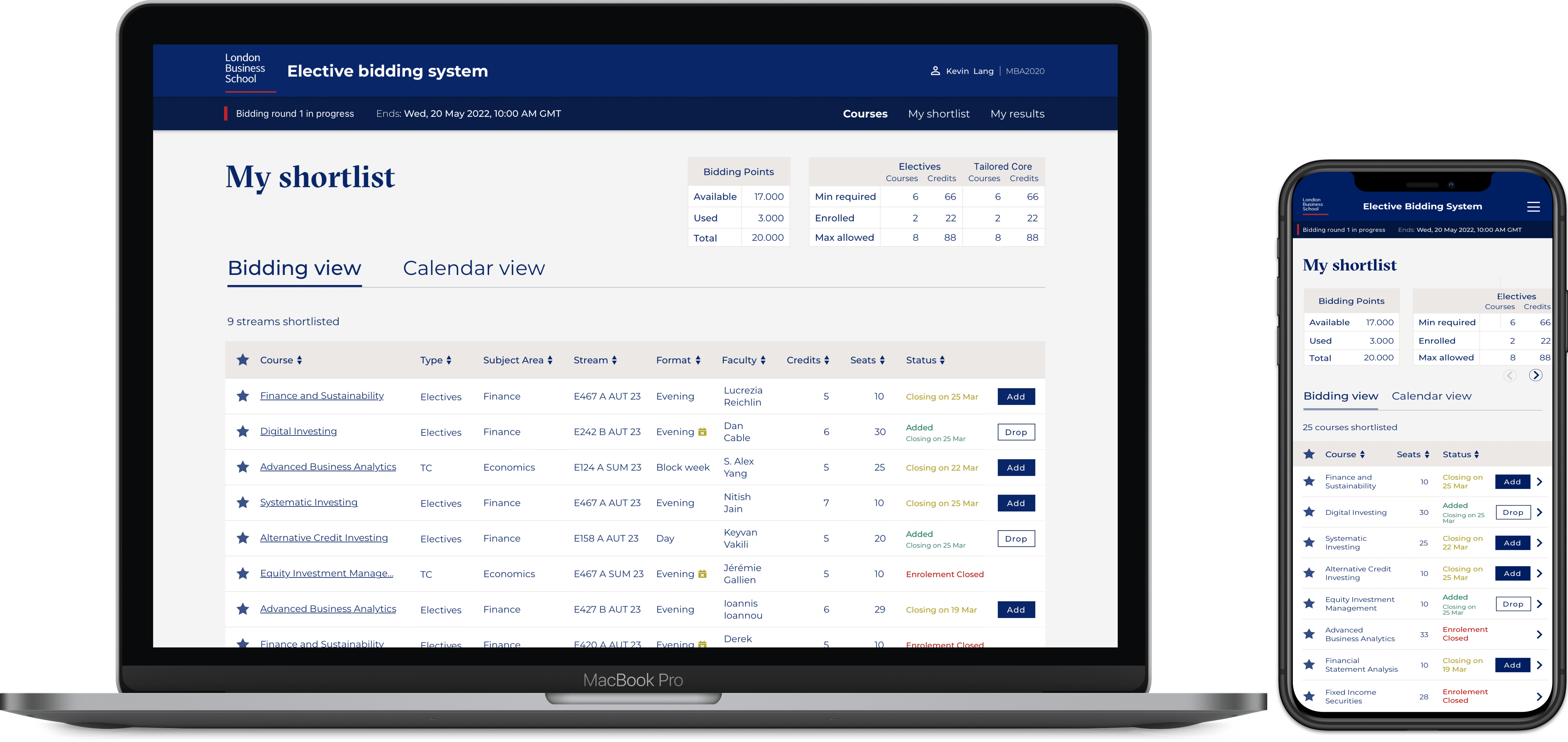
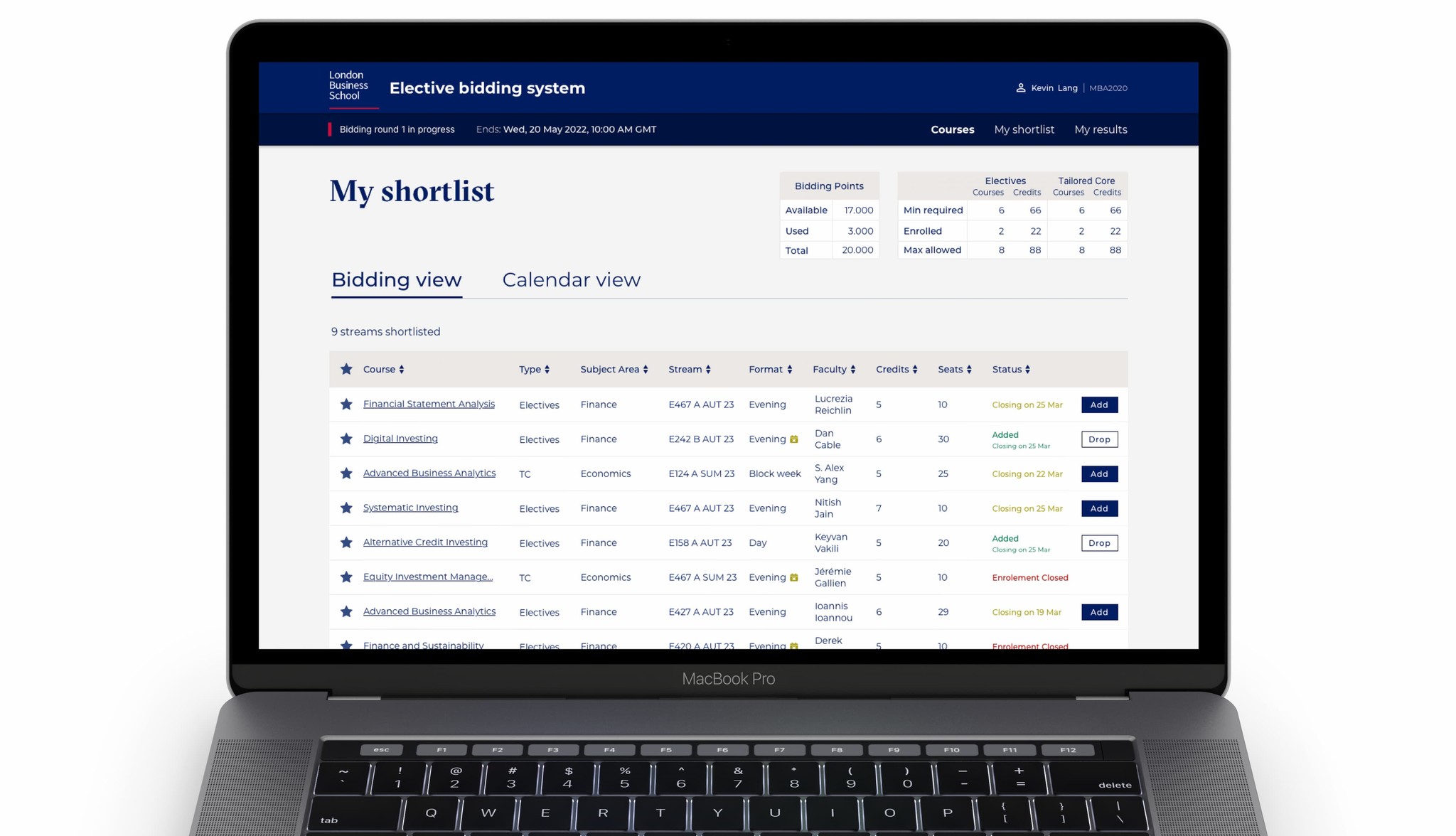
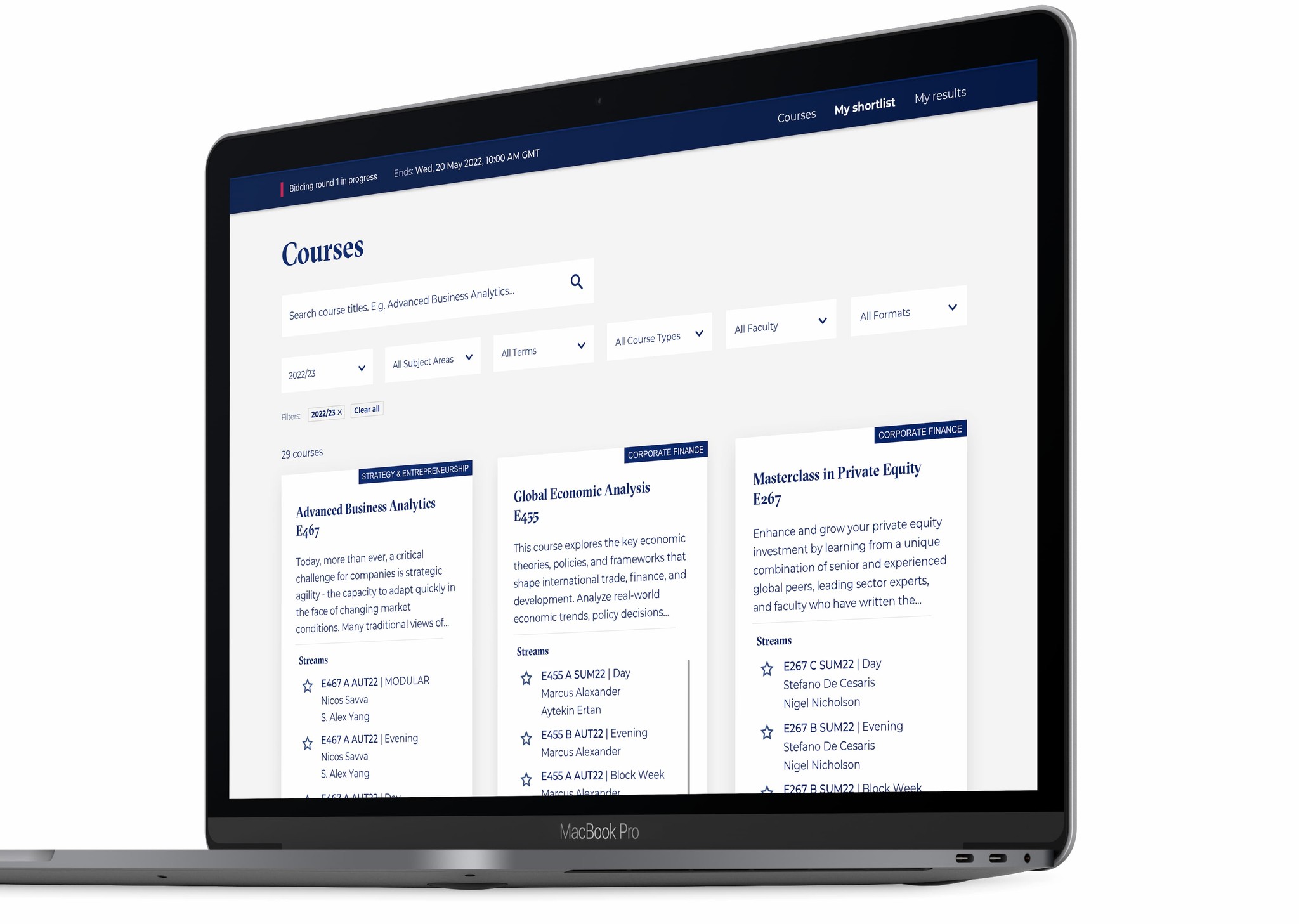
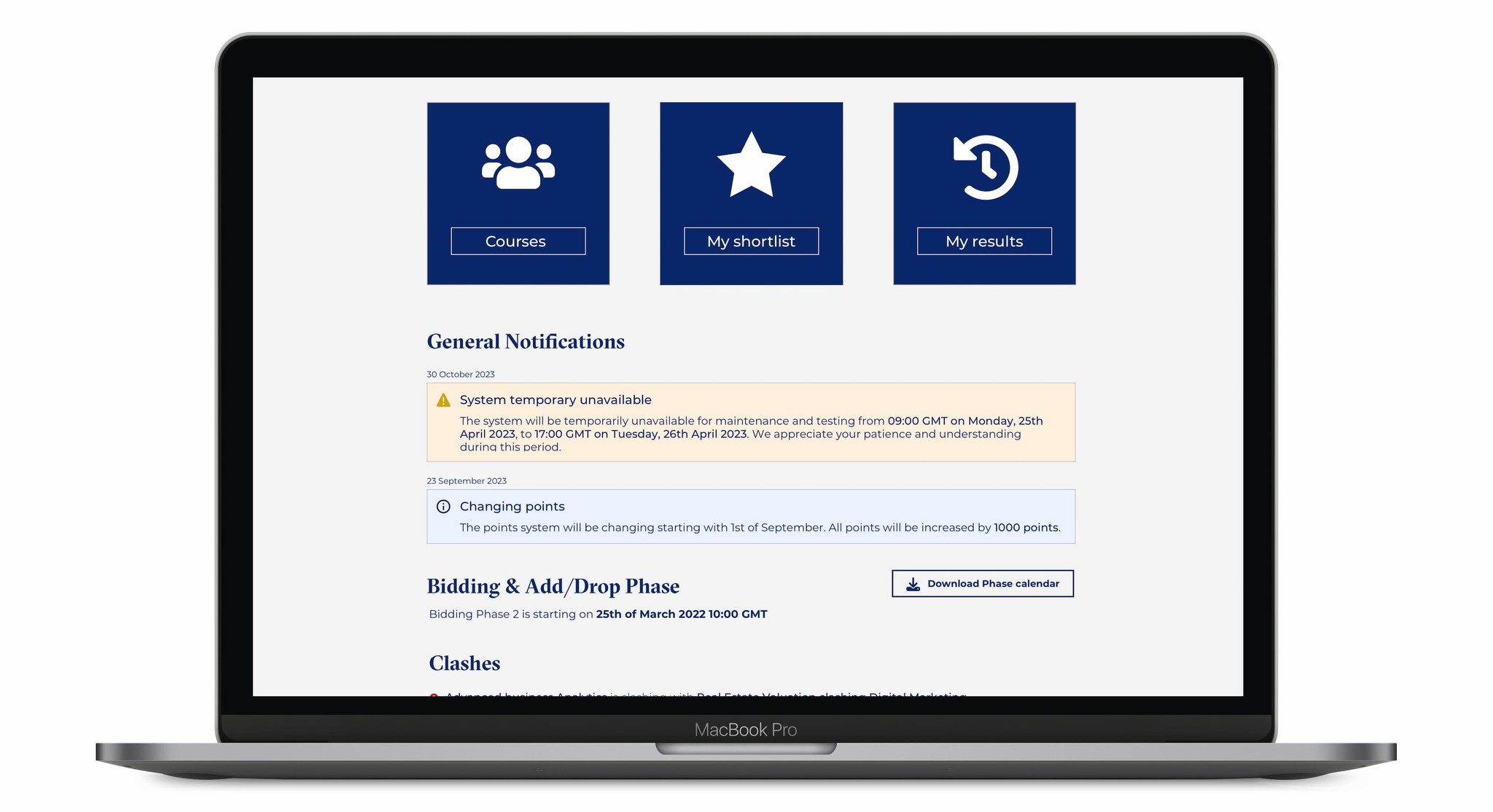
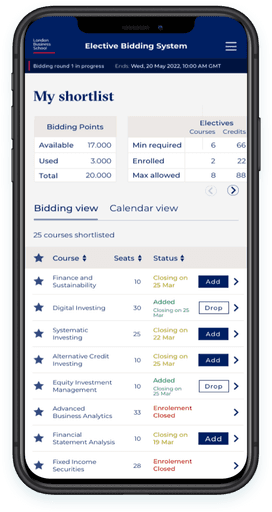
The existing elective bidding system at London Business School was fragmented, outdated, and no longer supported.
[Outcome]
Research question
“How might the elective selection and bidding experience ensure degree education students to thrive in their study at LBS and be best prepared to achieve their career goals?”
66 respondents
Purpose
Create a high-level understanding of students’ behaviour and opinions towards the elective bidding experience, especially around the two key systems provided by the school to serve this purpose – Course Directory and EBS.
How
Used Qualtrics to conduct online survey with degree students.
Survey findings
9 participants
Purpose
Discover students’ needs, motivations, behaviour, journeys, feelings, opinions and desire in order to create a heuristic view of the whole bidding process.
How
Collected live data daily through WhatsApp over 3 weeks period across pre, during and post one bidding round.
Customer journey mapping
Concept mapping
5 participants
Purpose
To understand what students think of and do for add/drop phase of the bidding process.
How
Conducted virtual interviews with diary study participants using Teams.
Add/drop findings
[Outcome]
The research identified 5 key findings:
1
The lack of a single centralised system results in inefficient student workflow.
2
The iterative and sophisticated nature of elective selection is underestimated in the current system.
3
Inconsistent information leads to mistrust between the students and the systems.
4
Decentralised communication and information display causes confusion and frustration amongst the students.
5
Information blackout period between the closure of bidding and publishing results causes anxiety and frustration amongst the students.
[Outcome]
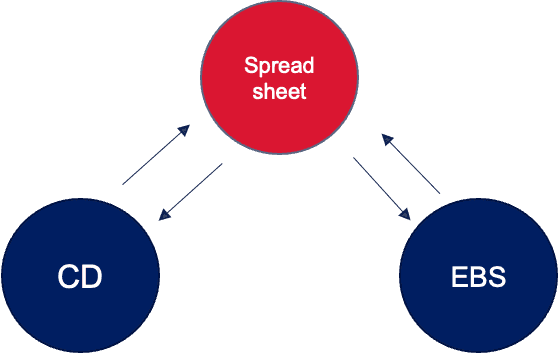
The lack of a single centralised system results in inefficient student workflow.
To fill in the gaps between current systems, students created personal spreadsheet in order to centrally organise and manipulate data.
Some of the activities performed outside of LBS systems are:
Copy and paste information from its original sources into personal spreadsheet at the selection stage.
Manually search for courses finalised in personal spreadsheet in order to place bid in EBS.
[Outcome]
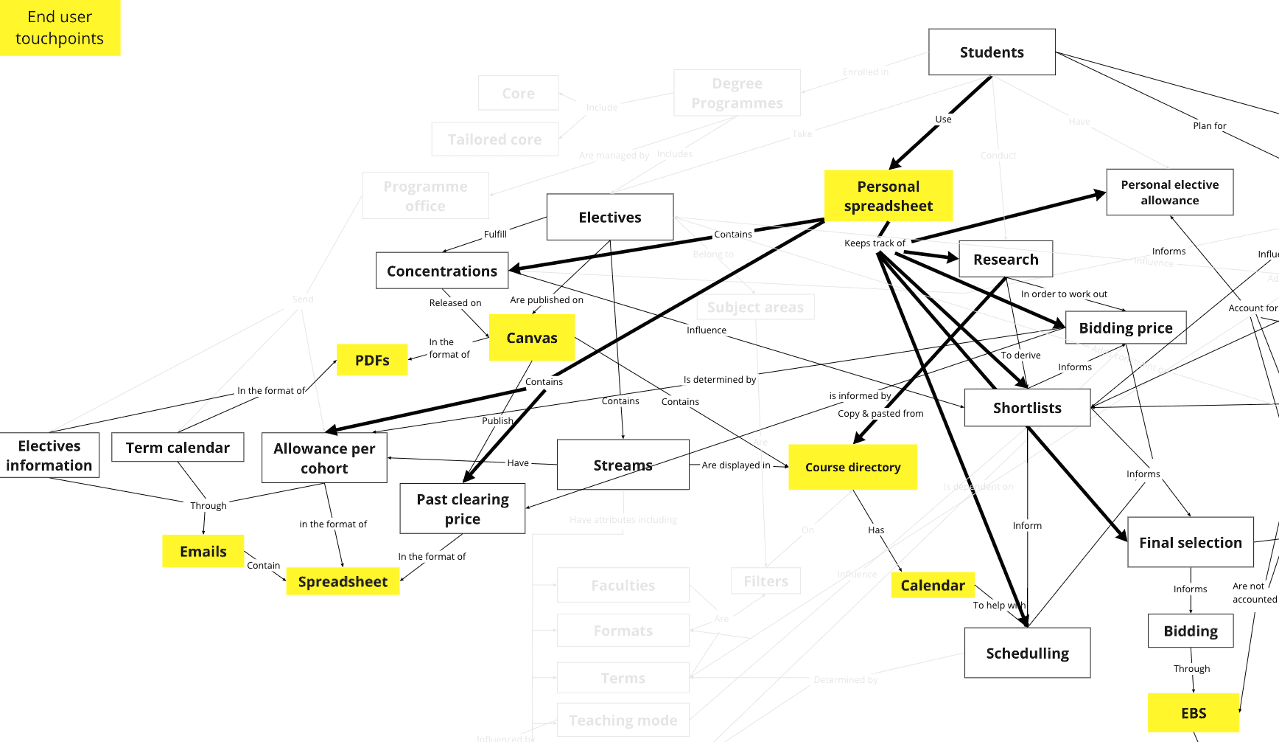
Decentralised communication and information causes confusion and frustration amongst the students.
[Outcome]
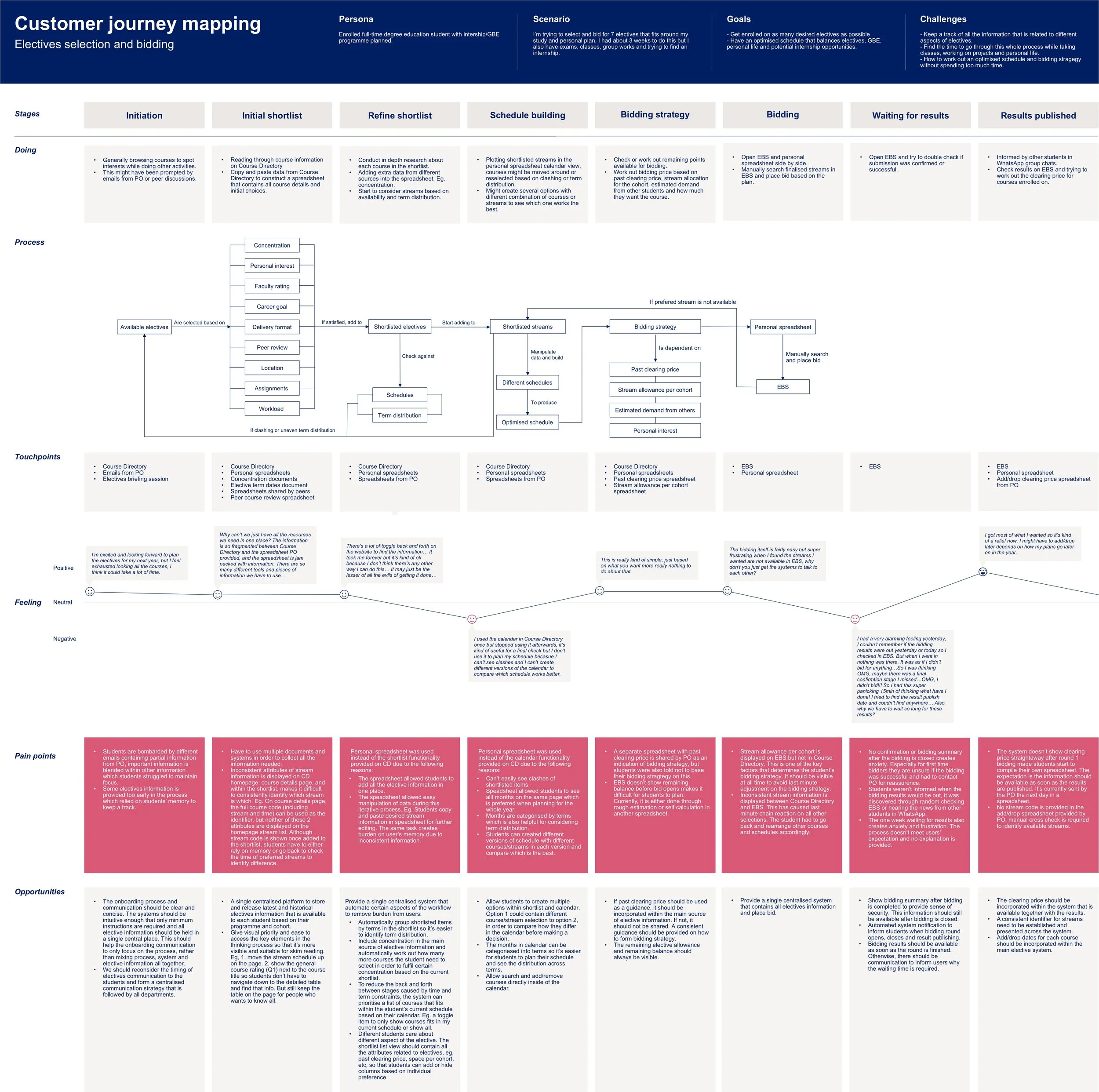
User journey mapping
Identify key touchpoints where users experienced confusion or frustration, especially moments where the experience felt disjointed between choosing, enrolling, and confirming electives.
[Outcome]
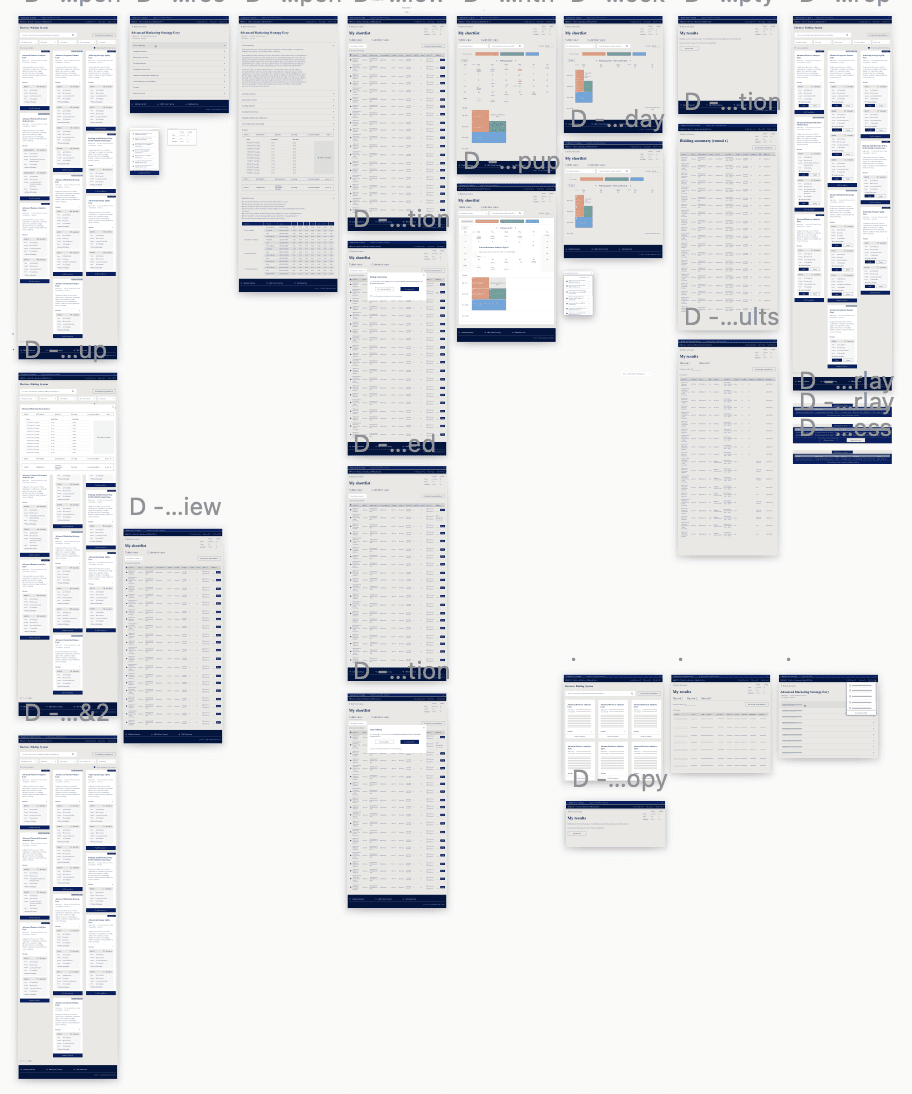
Wireframes
Brainstormed multiple flows addressing pain points from research.
Sketched early concepts to explore how students could shortlist and compare electives.
Collaborated with PM and engineers to validate technical feasibility.
[Outcome]
[Outcome]
What I could have done differently
1
Plan for Scalability & Future Features
To fill in the gaps between current systems, students created personal spreadsheet in order to centrally organise and manipulate data.
2
Strengthen Cross-Functional Collaboration
Some design decisions were revisited late in the process due to technical constraints. Establishing more regular design–engineering syncs early on could have minimized rework and improved implementation efficiency.
3
Broaden Participant Diversity
In some rounds of testing, participants were degree students already familiar with the system. Including exchange students or admin staff could have exposed additional workflow challenges and edge cases.